
8 min read ·
The Youngest Major Champions, Separated by Record Category
Compare Lottie Dod, Martina Hingis and Michael Chang by age, event and era, with the singles and doubles distinctions behind tennis’s youngest champions.
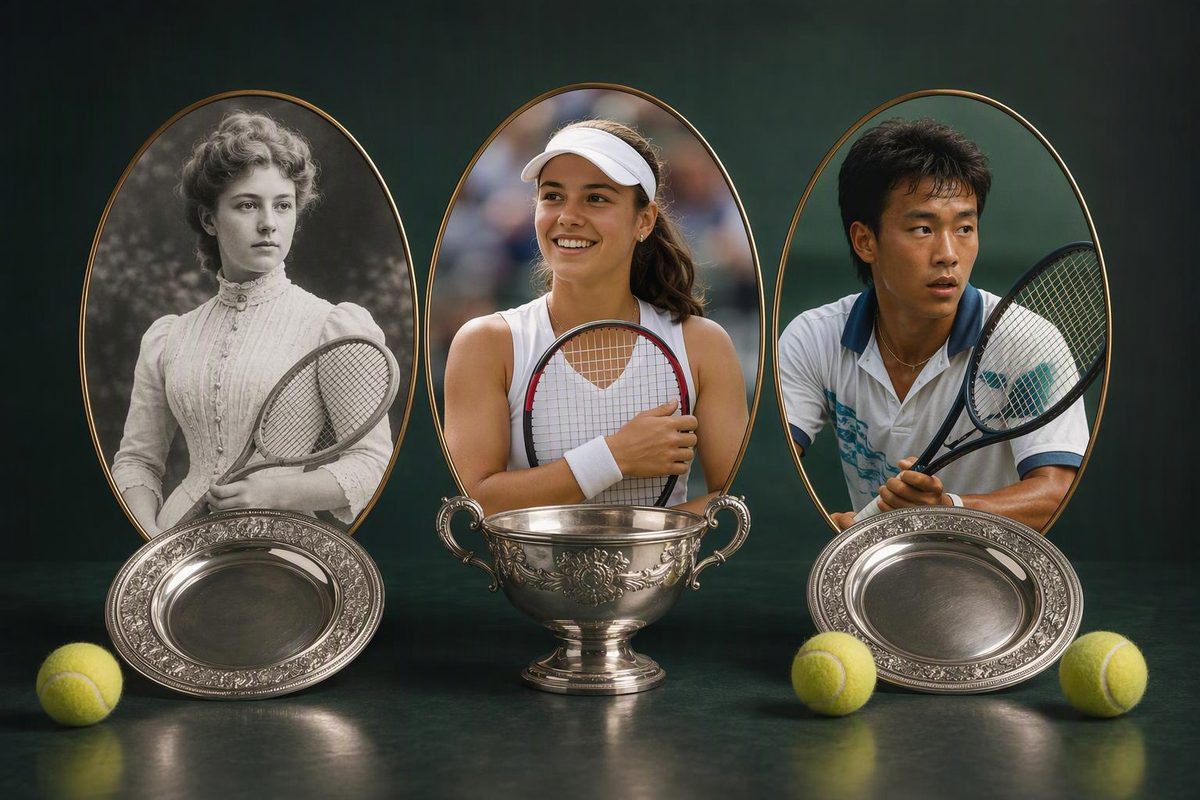
Lottie Dod is the youngest Grand Slam singles winner in tennis history, winning Wimbledon in 1887 at 15 years and 285 days. Martina Hingis holds the Open Era singles record, winning the 1997 Australian Open at 16 years and 117 days. Michael Chang holds the men’s singles record, winning the 1989 French Open at 17 years and 109 days. If you include doubles, Hingis won Wimbledon women’s doubles in 1996 at 15 years and nine months. The answer depends on the event and era—not on a disagreement about who won.
Choose a record category to see the champion, title and published age.
Find the Relevant Age Record
Lottie Dod
15 years, 285 days
Wimbledon women’s singles, 1887
Youngest all-time singles champion, across women and men.
| Category | Champion | Age |
|---|---|---|
| All-time singles | Lottie Dod | 15 years, 285 days |
| Open Era singles | Martina Hingis | 16 years, 117 days |
| Men’s singles | Michael Chang | 17 years, 109 days |
| Including doubles | Martina Hingis | 15 years, 9 months |
Events and Comparison Limits
Dod: Wimbledon women’s singles, 1887. Hingis: Australian Open women’s singles, 1997. Chang: French Open men’s singles, 1989. Hingis’s doubles title: Wimbledon women’s doubles with Helena Sukova, 1996.
These are senior, non-wheelchair records. Chang holds the men’s singles record all-time and in the Open Era. Doubles age is published in calendar months; an exact years-and-days figure is not supplied. A major title is not the same as completing all four majors.
Sources: Guinness World Records (Dod); WTA and Australian Open (Hingis); International Tennis Hall of Fame (Chang). Ages retain the sources’ published units.
The Youngest Winners by Category
These records cover senior, non-wheelchair championships, not junior titles. “Grand Slam winner” means the winner of one major championship here. It does not mean a player who completed all four majors in a calendar year.
| Record Category | Player | Championship | Age at Victory |
|---|---|---|---|
| All-time singles | Lottie Dod | Wimbledon, 1887 | 15 years, 285 days |
| Open Era singles | Martina Hingis | Australian Open, 1997 | 16 years, 117 days |
| Men’s singles | Michael Chang | French Open, 1989 | 17 years, 109 days |
| Including doubles | Martina Hingis | Wimbledon doubles, 1996 | 15 years, 9 months |
Guinness World Records identifies Dod as the all-time singles record-holder. The WTA identifies Hingis as the Open Era singles record-holder, and the Australian Open confirms her age of 16 years and 117 days.
The two broad singles categories include both women and men. Dod and Hingis therefore hold more than women’s records within their respective eras: they supply the youngest singles ages across those categories. Chang’s record answers the narrower question about men’s singles, both all-time and in the Open Era.
The doubles row needs a separate qualification. Its age is published in years and calendar months, while the singles ages are published in years and days. Those units should remain visible rather than being silently converted into an apparently more precise comparison.
Lottie Dod Holds the All-Time Singles Record
Dod’s record comes from Wimbledon women’s singles in 1887. She beat defending champion Blanche Bingley 6–2, 6–0 in the challenge round, winning the championship at 15 years and 285 days.
The International Tennis Hall of Fame’s account of Dod describes a tournament structure unlike a modern major. Dod played two rounds before a separate challenge match against the defending champion. Calling that match the championship-deciding match is accurate; treating her route as interchangeable with a modern singles draw is not.
That distinction does not invalidate the record. An all-time age record asks how old the champion was when she won a recognized championship. It does not require every champion to have played under the same draw format, eligibility rules or competitive conditions.
It does, however, limit what the record tells us about performance. Dod’s winning score describes the challenge match. It does not establish that her entire title run was a harder or easier achievement than Hingis’s Australian Open victory. The tournament routes were different, and the age statistic contains no adjustment for those differences.
For an unqualified question about the youngest singles Grand Slam champion in tennis history, Dod is the answer. Replacing her with Hingis without adding “Open Era” changes the scope of the claim. Conversely, citing Dod in response to a question explicitly limited to the Open Era ignores that same boundary.
Martina Hingis Holds the Open Era Singles Record
Hingis won the 1997 Australian Open women’s singles title at 16 years and 117 days. She defeated Mary Pierce 6–2, 6–2 in the final and completed the tournament without dropping a set, according to the Australian Open’s retrospective of her victory.
Her record is the youngest singles championship in the Open Era, across women and men. It is not the youngest singles championship across all of tennis history, because Dod’s earlier Wimbledon victory falls outside that era.
The final score and the set record describe different aspects of Hingis’s run. The score shows how the championship match ended. Winning the tournament without dropping a set describes her progress through the entire event. Neither changes the age attached to the title, but both add specific performance context that the age alone cannot supply.
A broadcast caption saying “youngest Grand Slam singles champion” may be using Open Era shorthand. Hingis is a correct answer only if that restriction is understood. For a reference table, the restriction should be printed rather than left for the reader to infer.
Her Australian Open singles victory must also be kept separate from her earlier Wimbledon doubles title. Both are senior major championships, but they establish records in different categories. Using her doubles age next to an Australian Open singles label would combine a valid age with the wrong event.
The clean description is therefore: Hingis became the youngest Open Era singles major champion at the 1997 Australian Open. Her younger Wimbledon doubles victory belongs in a broader title comparison, not in the singles ranking.
Michael Chang Holds the Men’s Singles Record
Chang won the 1989 French Open at 17 years and 109 days, an age recorded by the International Tennis Hall of Fame. His record applies to men’s singles both all-time and in the Open Era.
He defeated Stefan Edberg in the final 6–1, 3–6, 4–6, 6–4, 6–2. The score matters because Chang recovered from two sets to one down to win the championship. It was not a straight-sets title match, and the deciding set belonged to a different match from the one most often shown in footage of his run.
Chang’s famous underarm serve came in the fourth round against Ivan Lendl, not in the final against Edberg. The official Roland-Garros account of his 1989 victory documents both matches and identifies him as the youngest male major champion.
Against Lendl, Chang recovered from two sets down. Against Edberg, he recovered from two sets to one down. Keeping those match situations separate prevents an often-repeated highlight from being assigned to the wrong opponent or stage of the tournament.
These comebacks explain why the title run is memorable. They do not explain the age record mathematically: that record depends on Chang’s age when he won the championship, not on the number of sets he lost or the tactics he used.
Nor does the underarm serve establish a serving-quality record. The draft’s sources provide the championship age, match scores and match context, not a comparable serve-speed or ace-rate dataset for these youngest champions. An age table should not be repurposed as a ranking of their serves.
Doubles Gives Hingis an Earlier Major Title
Hingis won the 1996 Wimbledon women’s doubles championship with Helena Sukova at 15 years and nine months, as reported in the WTA’s Hingis profile. That is the relevant Hingis result when the question includes doubles rather than asking specifically about singles.
A doubles championship is a major title, but it is not a singles championship. Including it changes the population being compared: the table is no longer restricted to players who won alone in a singles draw. The partner and discipline should therefore accompany the result.
This is also why the phrase “Hingis won her youngest major at the Australian Open” would be misleading without a singles qualifier. Her Wimbledon women’s doubles title came in 1996; the Australian Open singles title came in 1997. The younger title and the Open Era singles record are separate achievements.
The published doubles age is less precise than the singles ages in the table. “Nine months” is a calendar-month expression, not a specified number of days. This draft does not supply an exact years-and-days age for that doubles victory, so the table does not invent one.
For this comparison, the safe presentation is to retain the source’s units and identify the event. That gives readers the earlier Hingis title without disguising a difference in precision or suggesting that the doubles age belongs to her singles record.
The Open Era Boundary Separates Dod From Hingis
The Open Era began in 1968, when professionals were allowed to compete alongside amateurs. Roland-Garros was the first Open Era Grand Slam tournament.
Dod’s 1887 Wimbledon championship belongs to the earlier amateur era. Hingis’s 1997 Australian Open championship belongs to the Open Era. That is the decisive classification difference between the two singles answers.
“All-time” includes the earlier championship; “Open Era” excludes it. The latter is not a correction to the former, and the former is not evidence that Hingis’s record is incorrectly reported. Each describes the youngest champion within a different eligible group.
The same boundary does not change the name attached to the men’s singles record in this comparison. Chang’s 1989 championship sits within the Open Era, and he holds the men’s record across both scopes.
Era labels help define a dataset, but they do not make all tournaments within that dataset identical. Even after choosing a scope, an age record remains an age record. It is not an adjustment for draw strength, match difficulty or the conditions under which the championship was played.
Read the Ages Without Adding False Precision
The singles entries use years and days. The doubles entry uses years and months. Preserve those distinctions when quoting the records, especially in a compact table where readers may assume every age has been measured in the same way.
Do not read “16 years and 117 days” as a decimal age, and do not treat a calendar month as a fixed number of days. A decimal display would require a conversion convention that the cited records do not provide. It would add formatting precision without adding evidence.
Likewise, the championship year is not a substitute for the player’s age at victory. The published age refers to the winning occasion, not simply to how old the player turned during that calendar year. Keeping the title and its age together prevents a biography detail from being mistaken for the record measurement.
The figures here establish the record-holders and their reported ages. They do not provide a complete age-ranked list of every major champion. There is therefore no supported basis in this draft for extending the table into a top ten or calculating a historical average winning age.
Use the Category That Matches the Claim
For all-time singles, use Dod. For Open Era singles, use Hingis. For men’s singles, use Chang. When doubles is included, identify Hingis’s Wimbledon title with Sukova and keep its published years-and-months age.
Those labels resolve the central ambiguity in “youngest Grand Slam winner.” Junior and wheelchair championships are outside this comparison, so these senior, non-wheelchair records should not be presented as answers for those events.
Winning one major also differs from completing a Career Slam or a Calendar Slam. Nothing in the youngest-title table establishes the age at which a player completed either broader achievement. For title totals and those distinctions, see our guide to Grand Slam tennis records.